How many of you kind of miss the excitement and rush of returning to school in September? Maybe not very many, although I did for a long time. I loved going to school – not the day-to-day drudgery of homework, but the atmosphere of learning, of hanging out with friends, of a place where there was alternately shared fellowship and angst but ultimately, shared belonging.
Of course this wasn’t everyone’s experience, and apologies to anyone who had a very opposite one, but going to school during our most formative years leaves an indelible impression on us. I still have dreams about visiting my old elementary or secondary school; not sure why, but even decades later I can’t seem to escape their pull. Is that weird, or do you have them also?
From the years I spent working at a college, I can tell you that the bustle of back-to-school is viewed with both affection and dismay by staff. The first couple of weeks are insanity among the students – lined up for hours completing the class registrations they should have done in August, schlepping mounds of belongings into residence, wandering around aimlessly trying to get their bearings. The lack of parking space and general air of barely-controlled chaos breed a certain amount of camaraderie among staff – it’s all part of the special ecosystem that makes academia run.
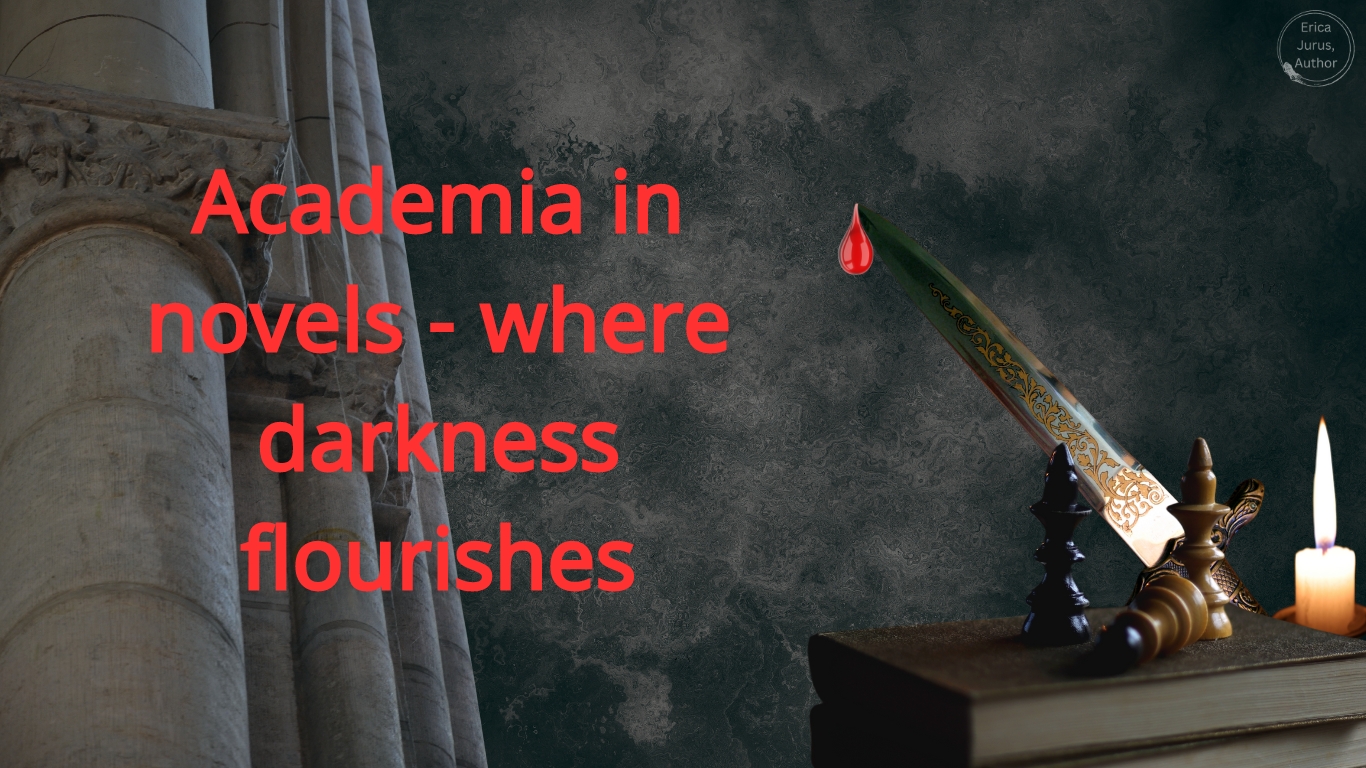
Add to that all the personal dramas and people thrown into close proximity, and the stress of it all can erupt into some naughty behaviour. Novels set on campuses proliferate, tapping into those hotbeds of emotion and mystique – especially in what’s called ‘Dark Academia’, where shadows and intrigue, even murder or horror, lurk among the hallways.

Schools in campus novels are ‘cosy’, enclosed systems. It’s like being part of a special club. In fantasy and urban fantasy novels, this is taken to an extreme. In the popular YA paranormal romance series Vampire Academy, St. Vladimir’s Academy is not where any of us would end up. It’s where vampires go to study and their ‘dhampir’ guardians train to protect them. Rose Hathaway is the half-vampire/half-human dhampir, and her best friend Lissa Dragomir is a breed of vampire called the Moroi, who are generally ‘good guys’. But the vicious Strigoi – Moroi who’ve lost their humanity – are always recruiting, and Lissa and Rose struggle together to keep them at bay. All the usual drama is there, from jealousy, territorialism and scheming to, of course, both forbidden and unrequited love.
The Harry Potter series is one of the ultimate campus stories, centering around the titular character and the school, Hogwarts, where he goes to learn about the magic he’s been born with. But lest any novice readers think that the books would fall under “light academia” because they’re written about and for children, the world of Hogwarts has plenty of darkness. From the terrible wizard who tried to kill Harry as a baby and pursues him still, to the school House of Slytherin that attracts the students who like to play dirty, to the scary forest just beyond the school grounds, J.K. Rowling showed a realistic world where not everything was sunshine and picnics on the lawn.
Light and Dark Academia are themes, with associated moods and colours. You’ll find them all over Pinterest and Instagram if you take a look, but in novels they translate to the tone of the story and what transpires. Readers generally expect certain tropes when they pick up novels in either category.
Light Academia was developed as an antithesis to Dark Academia. Much like romance novels, the theme is “generally positive, focusing on optimism, sensitivity, joy, gratitude, friendship, motivation, and happy endings”. There are visuals that go with the mood: a lighter, cream-and-beige colour palette; cozy imagery; architecture that we tend to see on museums and prestigious college campuses. Even the fashion on the characters tends to reflect the theme – think softly ‘preppy’, with blazers, knit sweaters, pleated skirts, lots of tweed and linen.

Dark Academia is more subversive. In some novels, the lightness on the surface hides wickedness underneath, as with Donna Tartt’s famous novel, The Secret History. The protagonist, Richard Papen, a student from a loveless California home, moves to Vermont to attend Hampden College, where he becomes fascinated by an avant-garde professor whose classes in Greek and the Classics are invitation-only. As Richard meets the few students that are in that group, he’s seduced by their exclusivity and perceived glamour. When he finally gains entrée, he finds that there’s an inescapable darkness inside.
There’s a definite air of danger in Dark Academia, whether it’s around murder, dark witchcraft, vampires and werewolves, or any number of imaginative threats that writers can come up with. When you think of these academic institutions, think darker and more saturated colours, Gothic architecture, hidden passageways, strange goings-on just out of sight, cultism, and all things murky and haunting.
Dark Academia overtly romanticizes the academic experience, where studying is done for the pure pleasure of it, in magnificent settings that make us envious of the people walking around in them. But there’s always some mischief taking place behind the fluted columns and gorgeous wooden book stacks.

One of my personal favourites is an older novel called Tam Lin, by Pamela Dean. Janet begins studying at a local college, Blackstock, where her father is a professor. The setting is the 1970s, which was very familiar to me as a university student during the same time. Janet makes friends, has dates – all the usual parts of trying to grow up. But, as in the Scottish folk tale that this story is taken from, there are mysterious goings-on, especially among her male friends, who all seem to be under some kind of dark hold by one of their female professors, Professor Medeous, head of the Classics department.
Studying the Classics (Greek and Roman languages, literature, mythology and history) seems to be a favourite of Dark Academia – perhaps it’s the overwrought drama and fantastical stories from ancient times that create an atmosphere conducive to malevolence. After all, the original Grimm’s Fairy Tales were much darker than the Disney versions we grew up with.
Novels of Dark Academia are perfect reading in the weeks leading up to Halloween (only 58 days away). They draw us into their shadows and send chills up our spines. Time to make a cup of tea and sink yourself into the shadier side of schools, which we all suspected was there from the beginning 😉
If this is going to be your first foray into the ‘genre’, Book Riot offers a thoughtful list of books to get started with. And of course, my own novels are partially set in an obscure college where all kinds of things lurk. Have fun!