I love the scents of winter! For me, it’s all about the feeling you get when you smell pumpkin spice, cinnamon, nutmeg, gingerbread and spruce. Taylor Swift
Sometimes Taylor speaks for all of us.
When the weather in the northern hemisphere turn harsh and the nights grow longer, comfort foods and wonderful aromas replace the solace of nature we can’t get outside.
As I worked on baking my featured dessert for this post, our skies here filled with dark clouds and rain began to plaster the remaining gold-bronze leaves to the ground. It had turned into the perfect day to write of foods that give us a feeling of well-being, especially for the holiday season approaching.
The December holidays give us an excuse to indulge, and our tastes still spring from Victorian times, from the Christmas that Dickens wrote about so eloquently in A Christmas Carol.
A Christmas meal in Victorian-era Toronto looked very much like its British version: a game bird like goose/turkey/duck, or a ham, sourced from surrounding farms, and for dessert plenty of sugar, which was becoming increasingly popular in North American diets – a plum pudding, along with mincemeat tarts, a fruitcake and sugar cookies. The delightful Christmas episode of Murdoch Mysteries, A Merry Murdoch Christmas, immerses you in that world, from Constable Jackson’s well-sauced Christmas goose to the oranges gifted by George Crabtree to William and Julia for Christmas morning.
Oranges were a special treat that could be afforded by the wealthy and were imported largely from Spain. Dried fruit like prunes, and nuts, were also being imported from the Balkans. George’s gift was a special one indeed, bringing the scent of sunny orchards to the chilly December day.
According to the Culinaria Research Centre at U of T Scarborough, tea with a teaspoon of sugar from the Islands was very in 19th century Toronto, and it seems that “Virtually everyone in the city at the time would likely have had a cup of tea at some point over Christmas”. My hubby and I would have fit in perfectly, since we begin Christmas day (and every day) with an aromatic cup of our favourite tea, steaming gently in a festive mug.
Our holiday breakfast varies depending on what strikes me as I sift through hundreds of collected recipes. After hosting Christmas Eve dinner, this year I want to wake up to some baked cinnamon French toast with orange caramel sauce that I can prep the day before, and a platter of quickly crisped sausage patties – with tea, of course. Even the tea itself is exotic, imported from lands on the other side of the earth.
Exotic foods have been luxurious treats for millennia. They embody the next level of pampering, the culinary version of a spa day.
By 2000 BCE a trade in spices had already swept Asia, the Indian subcontinent and the Middle East: cinnamon, cloves, black pepper, herbs. Not only did they grace the tables of wealthy rulers, they were important ingredients in numerous medicinal concoctions. The Ebers Papyrus from 1550 BCE in early Egypt describes around eight hundred different herbal medications and procedural applications. The Egyptian port city of Alexandria became the main trading center for spices as Arab and Indonesian merchants followed spice routes across the known world.

The spices that make our holiday foods so enticing are considered “warm” spices, not just for the warmer climes they come from but also how they affect us as we consume them.
Cinnamon is probably the most iconic such spice, warming our tummies and our spirits in everything from buns to coffee to a hot bowl of oatmeal. As most people know by now, cinnamon comes from the inner bark of trees from the genus Cinnamomum. It can have different flavour notes depending on where it’s grown – China, Myanmar, Vietnam, Indonesia, Sri Lanka. It’s a rich source of polyphenols, which boosts our immune systems, reduces blood pressure, even relieves aching muscles.
Cloves are the unopened flower buds of the Syzygium aromaticum tree. They’re native to the Spice Islands of Indonesia. Both decorative and tasty, they also have antiseptic and analgesic properties. In traditional Chinese medicine, they’re used to treat fungal infections, indigestion and diarrhea. Here in North America their oil has long been used to soothe toothache, before the days of regular dental visits – we sold quite a few little vials of it when I first began working as a pharmacy assistant.
Nutmeg is the classic holiday addition to eggnog and mulled wine. It’s a sweet, subtle spice that slips in and enhances the flavour of creamy sauces, roasted meats and vegetables, and all kinds of baked goods. Nutmeg and mace (which comes from the reddish casing around the nutmeg seed) arrive on our shores from the same Southeast Asian tree.
Ginger and cardamom are related. Ginger is ubiquitous now, flavouring anything from baking (fabulous in sauteed apples to top French toast or pancakes), stir-fries and curry dishes to herbal tisanes to candies for indigestion. It is a genuine remedy with anti-nausea properties. It may also help stabilize cholesterol levels and relieve osteoarthritis pain. However, it has a powerful flavour that doesn’t appeal to everyone, and generally should be used with a careful touch.
Cardamom is its more floral cousin. Strong, sweet and pungent, it works in both sweet and savoury dishes and evokes ancient times in distant lands. It’s my personal favourite of all the spices, and seems particularly appropriate during a holiday season with Biblical roots (for Christians, at least).
It comes from the seeds of several plants in the family Zingiberaceae. There are two types: black, with a paradoxically both smokier and cooler, almost minty, flavour, and green, which we tend to see the most of in whole form. Cardamom production began millennia ago, as early as the third millennium BCE.
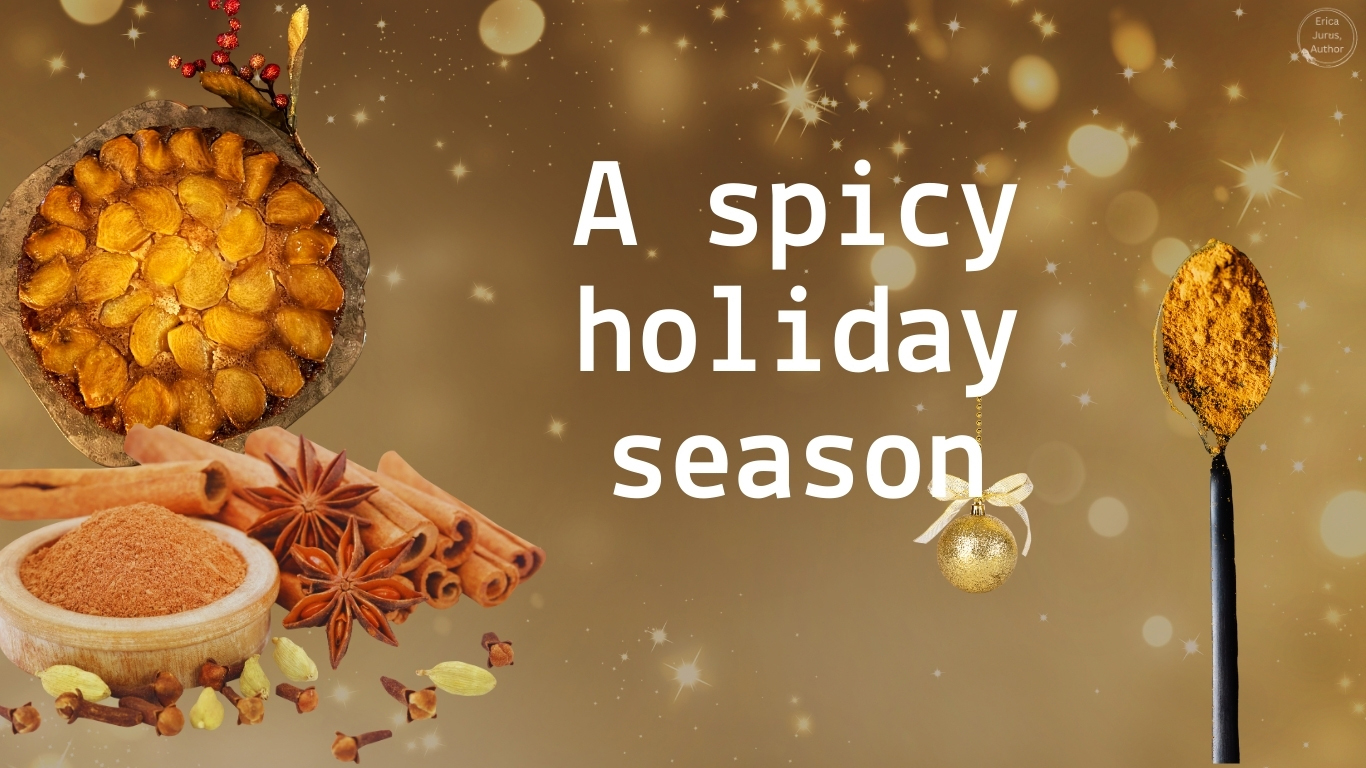
If you’ve never tried cardamom, I’m including a recipe for the light but aromatic upside-down cake I made today. The original recipe is for pears, but I was lucky enough to come across cases of beautiful orange persimmons, another especially exotic fruit we don’t generally see the rest of the year (around where I live anyway), and I had to buy them. I no longer know the source of this recipe, but it’s fairly classic in the upside-down cake genre, and easy to make if you’re new to scratch baking. Enjoy! (Photo in the featured image for this post.)
Upside-down Persimmon and Cardamom Cake
Makes one 9-inch diameter round cake
1.5 cups all-purpose flour (sifted lightly)
1/4 teaspoon salt
2 teaspoons baking powder
1 teaspoon ground cardamom
1.25 sticks unsalted butter, room temperature, divided
1/2 cup packed golden brown sugar
3/4 cup white sugar
2 firm-ripe Fuyu persimmons (the shorter ones that look a bit like a squashed tomato)
2 eggs, room temperature
1/2 cup milk, room temperature
1 teaspoon vanilla extract
1. Heat oven to 350 degrees F. Generously butter a 9-by-1 1/2-inch round cake pan.
2. Combine flour, salt and baking powder together in a small bowl. Stir in the cardamom and set aside.
3. Melt one-quarter stick butter in the microwave. Add the brown sugar and stir for 2 to 3 minutes, until the sugar has combined with the butter. Pour the mixture into the prepared cake pan, spreading it to reach the sides.
4. Peel the persimmons, remove the small, stiff core, and slice lengthwise into one-quarter-inch-thick slices. Arrange the slices in a slightly overlapping circle around the cake pan, starting at the outer rim. Finish with several slices in the center.
5. Beat the remaining stick of butter in the bowl of an electric mixer until soft and fluffy. Add the sugar and beat until smooth. Add the eggs one at a time, beating after each addition. Beat in the vanilla, scraping down the sides of the bowl when needed. Alternately add the flour mixture and the milk, beating after each addition just until combined.
6. Gently spoon the cake batter on top of the persimmons, smoothing out to the edge of the pan and making sure the cake batter fills in around the fruit.
7. Bake until the topis a deep golden brown and a toothpick inserted in the center comes out clean, about 40 minutes. Place the cake on a rack to cool for 5 minutes in the pan.
8. Run a small spatula or knife around the edge of the pan and invert onto a cake plate. Carefully remove the pan. Serve warm or at room temperature.